GST billing5 min read
GST billing software features a manufacturer actually uses every day
Managing GST compliance in a busy factory requires precision. Learn how the right billing features can eliminate errors in tax calculations and HSN codes.
By Appikorn team ·
In this article
Short answer
How can I ensure my GST invoices are always accurate?
To ensure accuracy, use a system that generates invoices directly from your dispatch records. This prevents manual entry errors by automatically applying the correct tax split (IGST or CGST/SGST) based on the customer's location and pulling the correct HSN codes directly from your verified product master data.
The problem: a realistic day in an Indian SME factory
In a typical Indian manufacturing unit, the end of the day is often the most chaotic. The store keeper has just finished packing a shipment for a customer located in a different state. The dispatch note is ready, but the invoice remains a hurdle. The person responsible for billing must quickly determine whether to apply IGST or split the tax into CGST and SGST. If the customer is in the same state, the split is mandatory; if they are across state lines, IGST is required. A single mistake here—selecting the wrong tax type or miscalculating the total—can lead to significant compliance headaches later.
Furthermore, the HSN (Harmonized System of Nomenclature) code must be perfectly aligned with the item being shipped. If the code is missing or incorrect, the invoice becomes invalid in the eyes of the tax department. For a busy factory manager, manually checking these details against product lists while under pressure to get the truck moving is a recipe for error. When the shop floor is active and the production line is running, administrative tasks like generating an accurate, GST-compliant invoice often get pushed to the last minute, increasing the likelihood of oversight.
What it costs: time, rework, money and risk
The cost of manual billing errors extends well beyond a few minutes of extra work. When an invoice is issued with the wrong tax component, the customer will likely reject it, demanding a correction. This forces the accounts team to issue credit notes and generate new invoices, effectively doubling the administrative effort for a single transaction. This rework consumes valuable time that could be spent on production planning or managing inventory levels.
Beyond internal inefficiency, there is the risk of non-compliance. Tax authorities require precise documentation. Frequent errors in HSN codes or incorrect tax slabs can flag a business for closer scrutiny. Additionally, if the billing process is disconnected from the dispatch process, there is a risk of shipping goods without a valid invoice, which can cause delays at check-posts if an e-way bill is required. While official government portals provide the framework, the internal process of preparing the data remains the responsibility of the manufacturer. Poor billing practices eventually lead to financial leakage through penalties, lost customer trust, and the hidden costs of constant firefighting.
How the team did it before: paper, spreadsheets, WhatsApp
Before adopting structured digital tools, many factories relied on a combination of fragmented methods. The process usually started with a handwritten delivery challan from the store room. This paper would be handed over to an office assistant, who would then open a generic spreadsheet to create an invoice. The assistant would manually type in customer details, item names, and prices, often guessing the tax rates or looking them up in a separate, outdated document.
Communication was equally inefficient. The store keeper would send a photo of the packed items via WhatsApp to the office, hoping the billing person would see it in time. If the price had changed or if a specific HSN code was updated, the information often didn't reach the office promptly. This led to a situation where the invoice was frequently disconnected from the actual physical goods being shipped. Tracking whether a customer had received the correct items at the agreed price became a guessing game, and the lack of a central ledger meant that reconciling payments against specific invoices was a slow, manual process that invited frequent disputes.
How Velom solves it, step by step
Velom streamlines the gst-billing process by ensuring that the invoice is generated directly from the dispatch record, eliminating manual data entry and calculation errors. By linking the invoice to the actual physical movement of goods, the system ensures that the tax, HSN, and customer details are consistent and accurate.
- Initiate from Dispatch: Once the store keeper confirms the items are packed and ready, the dispatch record is marked as complete.
- Generate Invoice: Use the direct button on the dispatch or order page to create a draft sales tax invoice.
- Automatic Tax Calculation: The system automatically identifies the place of supply and applies the correct tax split (IGST or CGST/SGST) based on the customer's registered address.
- HSN and Item Validation: The invoice pulls the correct HSN codes and item descriptions from the master data, ensuring that every line item is compliant.
- Review and Approve: The billing manager reviews the draft, which shows the final totals and tax breakdown clearly.
- Finalize: After approval, the system generates a professional PDF, ready to be sent to the customer.
- Record Payment: Once the customer pays, the receipt is recorded against the specific invoice, automatically updating the status in the receivables ledger.
Example scenario
This is an illustrative example, not a real customer. Imagine a factory that produces industrial components. On Monday, they receive a request for 500 units. The team spends two days in production, and by Wednesday, the items are ready. Before using an automated system, the office would take three hours on Thursday to manually draft, check, and edit the invoice, often finding that the HSN code was outdated or the tax split was wrong. This delayed the dispatch until Friday morning.
After moving to a system that integrates dispatch with billing, the workflow changes significantly. On Wednesday, as the store keeper scans the items during the packing process, the system automatically tracks the quantity. On Thursday morning, the billing manager simply opens the system, clicks on the completed dispatch, and sees the invoice already populated with the correct HSN, pricing, and tax split. The entire review and generation process takes less than ten minutes. By Thursday afternoon, the invoice is sent, and the goods are on the truck. The factory saves half a day of administrative time every week, and the risk of tax calculation errors is virtually eliminated.
What to check before you start
Before implementing any new billing process, ensure your foundation is solid. Start by verifying that all your customer master records contain the correct GSTIN and billing/shipping addresses. If these are incorrect, your tax calculations will fail. Next, ensure that your HSN codes are assigned correctly to every SKU in your inventory. Check the latest notification from the tax department regarding HSN requirements, as these can change based on your annual turnover. Finally, ensure your team understands the difference between a delivery challan and a tax invoice, as these serve different legal purposes in the movement of goods. Having clean, updated data is the most important step toward error-free billing.
Frequently asked questions
How can I ensure my GST invoices are always accurate?
To ensure accuracy, use a system that generates invoices directly from your dispatch records. This prevents manual entry errors by automatically applying the correct tax split (IGST or CGST/SGST) based on the customer's location and pulling the correct HSN codes directly from your verified product master data.
Do I still need to file my GST returns on the government portal?
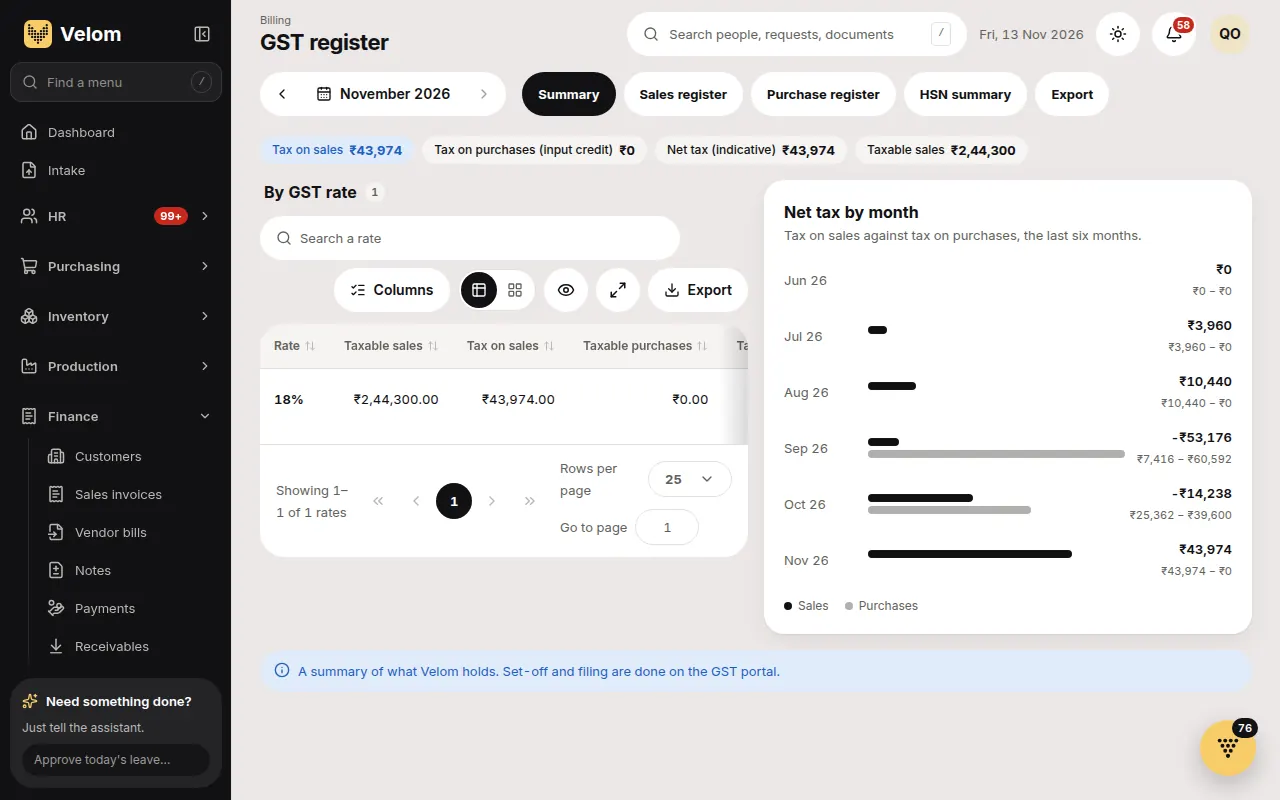
Yes. While a billing system helps you create accurate invoices and maintain your sales register, it does not file your GST returns. You must continue to use the official GST portal for filing returns and making tax payments.
What should I do if my customer is in a different state?
When shipping to a different state, you must charge IGST. A reliable billing system will automatically detect the place of supply from the customer's address and apply the correct IGST rate instead of splitting it into CGST and SGST.
How often should I update my HSN codes?
You should review your HSN codes whenever there is a change in government policy or if you introduce new product categories. Always check the latest notification on official government websites to ensure your turnover-based HSN digit requirements are met.