Leave6 min read
Loss of Pay: Managing Attendance and Salary Deductions in Factories
Managing loss of pay (LOP) requires clear attendance records and consistent payroll policies to avoid disputes with factory staff.
By Appikorn team ·
In this article
Short answer
What is the primary cause of loss of pay (LOP)?
Loss of pay typically occurs when an employee is absent without prior approval or has exhausted their total leave balance for the year.
Understanding Loss of Pay in the Factory Context
Loss of pay (LOP) occurs when an employee is absent from work without approved leave or has exhausted their allotted leave balance. For factory owners and HR managers, tracking these days is a critical part of maintaining a fair and compliant payroll system. When an employee is absent, the time not worked must be accurately translated into a financial deduction to ensure that the company pays only for the actual time spent on the shop floor.
The process starts with a reliable attendance record. Without a clear log of who is present, on leave, or absent, calculating LOP becomes a source of friction between management and workers. In an industrial setting, even small errors in tracking shift timings or weekly offs can lead to incorrect salary payments. Establishing a transparent policy where employees understand how their attendance affects their monthly earnings is the first step toward reducing payroll errors and disputes.
The Link Between Attendance Records and Payroll
Every salary cycle relies on the data captured during the month. If an employee is marked absent on a day that was not a declared holiday or a weekly off, that day is typically treated as a loss of pay. HR staff must ensure that the attendance register accounts for every shift, including overtime or partial absences, before the final payroll run. Using a system that automatically flags missing check-ins or unapproved leaves prevents the common mistake of paying for days an employee did not work.
Consistency is key when applying these deductions. If your factory policy allows for permission or short-duration absences, these should be clearly distinguished from full-day absences. When a worker misses a shift without prior notification, the system should ideally flag this as a pending review rather than automatically categorizing it as LOP. This allows HR to verify if the absence was due to an emergency or a genuine misunderstanding, ensuring that the final payroll calculation remains accurate and fair.
Statutory Considerations and Wage Ceilings
When calculating deductions, it is essential to remember that statutory contributions like EPF and ESI are based on the actual wages earned. If an employee has several LOP days, their gross wages for the month will decrease, which in turn affects the calculation of these statutory components. Always check the latest notification regarding wage ceilings for PF and ESI to ensure that your deductions remain compliant with current labor laws. Miscalculating these amounts can lead to compliance issues during audits.
Professional tax (PT) is another state-specific deduction that may vary depending on the total monthly income of the employee. Because PT slabs are often linked to monthly salary brackets, a significant number of LOP days might shift an employee into a lower tax bracket for that specific month. HR teams should maintain updated records for every employee to ensure that deductions for statutory compliance are adjusted correctly based on the actual number of days worked.
Setting Up Clear Leave Policies
A well-defined leave policy helps minimize the frequency of LOP. Employees should be aware of their yearly leave allowances, including casual, sick, and earned leaves. When leave balances are transparent, workers are more likely to apply for leave in advance rather than simply staying away from the factory. A clear policy also defines what happens when a worker takes leave without pay, such as whether they can adjust it against future accruals or if it must be deducted immediately.
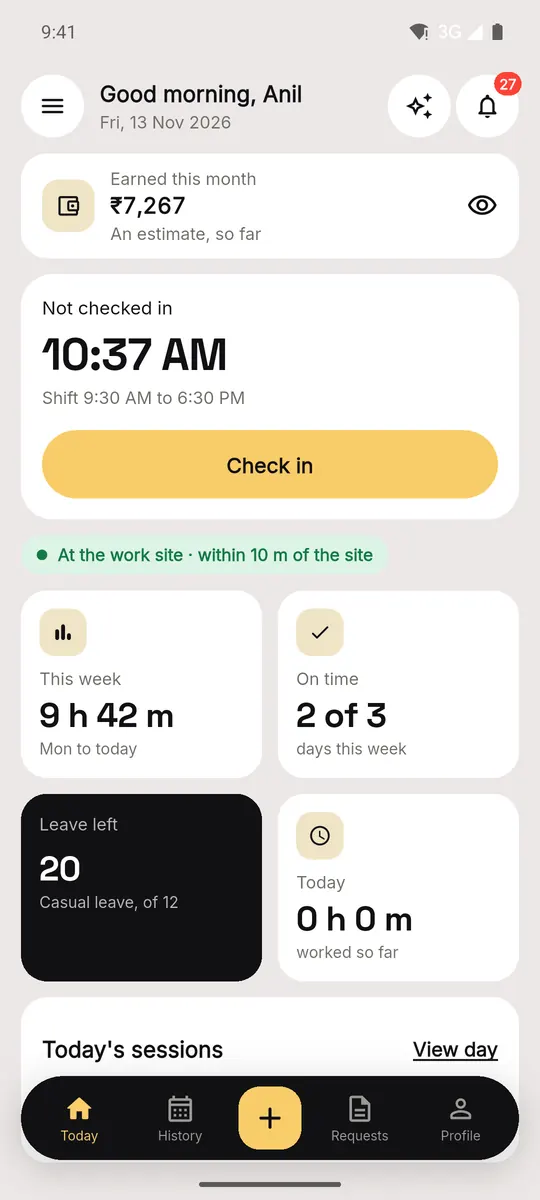
For factory managers, it is helpful to provide a simple way for staff to view their own leave balances and attendance history. When employees can see their status, they can plan their time off more effectively. This reduces the administrative burden on HR to resolve queries about why a specific amount was deducted from the monthly salary. Encourage your team to submit leave requests through a formal channel so that you have a documented audit trail for every absence.
Handling Manual Corrections and Disputes
Despite the best systems, manual corrections are sometimes necessary. A worker might forget to check in, or a shift might be extended due to an urgent production requirement. In such cases, the manager must have the authority to review and approve attendance corrections before the payroll is locked. This human oversight is necessary to ensure that LOP is only applied when it is truly warranted, rather than as a result of a technical glitch or a forgotten punch.
If a dispute arises regarding a salary deduction, having a detailed log of attendance is your best defense. A robust attendance system that records timestamps and location data provides the evidence needed to settle such disagreements. By showing the employee their own check-in history, you can explain the calculation clearly. This approach fosters trust and ensures that the factory operations remain productive without lingering resentment over payroll discrepancies.
How Velom Helps Manage Attendance and Payroll
Velom simplifies the entire process of tracking time and calculating salaries. It offers a structured way to record check-ins and check-outs, ensuring that every shift is accounted for. When a person is absent, the system marks the day as 'Needs review' or 'Absent', preventing the automatic payment for unworked time. The payroll feature then uses this attendance data to calculate earnings and deductions automatically, including statutory contributions like PF and ESI based on the actual days worked.
With Velom, HR managers can easily approve leave requests, manage overtime, and handle attendance corrections in one place. By centralizing this data, you ensure that the final payroll run is accurate and that any loss of pay is applied based on verified attendance records. This reduces the risk of errors and saves significant time during the end-of-month salary processing, allowing you to focus on managing your small factory operations efficiently.
Best Practices for Monthly Payroll Closing
To ensure a smooth payroll closing, perform a pre-check of the attendance register a few days before the month ends. Identify any employees with missing check-ins or unapproved absences and notify them to provide the necessary information. This proactive step helps in resolving potential LOP issues before the final salary calculation, reducing the need for manual adjustments or arrears in the following month.
Ensure that all leave approvals are updated in the system. If your company allows for leave encashment or carries forward, make sure these rules are applied consistently. Finally, once the payroll is calculated, give employees a chance to view their earnings estimate. This transparency helps in catching errors early, ensuring that the final payslips are correct and that every employee is paid exactly what they have earned for their time on the shop floor.
Frequently asked questions
What is the primary cause of loss of pay (LOP)?
Loss of pay typically occurs when an employee is absent without prior approval or has exhausted their total leave balance for the year.
How should I handle an employee who forgets to punch in?
Use an attendance system that allows for manual correction requests, which a manager can then review and approve to ensure the employee is paid correctly.
Does LOP affect statutory contributions like PF and ESI?
Yes, because PF and ESI contributions are calculated based on the actual wages earned, a reduction in pay due to LOP will proportionally lower these contributions.
What is the best way to avoid disputes over salary deductions?
Maintain a transparent attendance system where employees can view their own records and leave balances, and ensure your leave policy is clearly communicated to all staff.